.png)
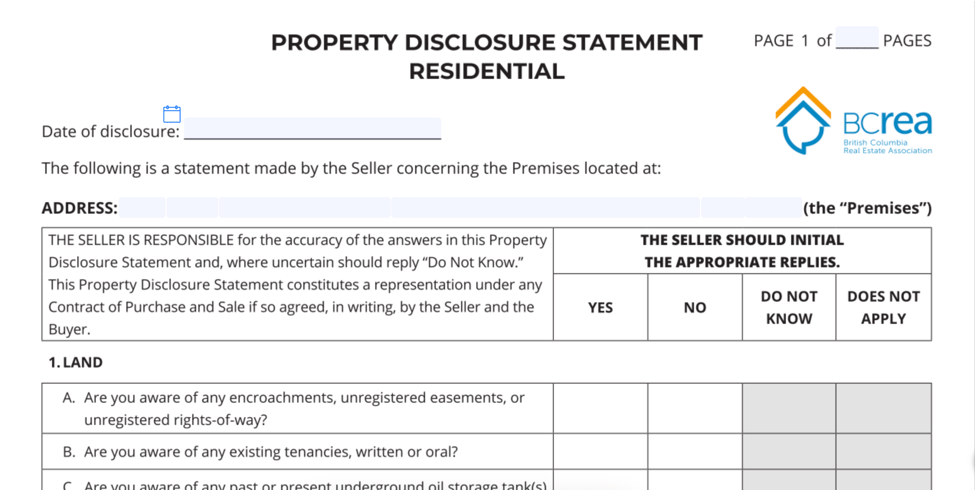
Selling a home in British Columbia involves several important legal documents, and one of the most crucial for sellers is the Property Disclosure Statement (PDS). This document is designed to provide potential buyers with vital information about your property, helping to ensure a transparent and smooth transaction. For sellers, understanding the PDS is not just about legal compliance, but also about protecting yourself from future liability.
What is the BC Property Disclosure Statement (PDS)?
The BC Property Disclosure Statement is a standard form used in real estate transactions in British Columbia. It requires sellers to disclose known material latent defects and other significant information about the property to prospective buyers. Unlike some other jurisdictions, the PDS in BC is not optional in most residential sales and is generally presented by the seller's agent to the buyer's agent.
The PDS covers a wide range of aspects of your property, from its physical condition to potential legal issues. It's a snapshot of your knowledge about the property at the time of disclosure.
Why is the PDS so Important for Sellers?
The primary purpose of the PDS from a seller's perspective is to protect you from potential future lawsuits. In real estate, the principle of "caveat emptor" (buyer beware) traditionally placed the onus on the buyer to discover defects. However, the PDS shifts some of this responsibility, requiring sellers to be upfront about known issues.
By honestly and completely filling out the PDS, you are providing transparency to the buyer. If a problem arises after the sale that was clearly disclosed on the PDS, the buyer would have difficulty claiming they were unaware of it. This significantly reduces your risk of being held liable for misrepresentation or non-disclosure down the line.
Protecting Against Future Liability:
Imagine selling your home and, months later, the new owners discover a major leak in the basement that you knew about but didn't disclose. Without a PDS, they might have a strong case against you for damages. If you had disclosed the leak on the PDS, the buyers would have been aware of it before purchasing, likely factoring it into their offer or requesting repairs.
The PDS helps to:
Prevent Misunderstandings: By putting all known issues in writing, it minimizes ambiguity.
Establish Due Diligence: It demonstrates that you, as the seller, have made a reasonable effort to inform the buyer.
Reduce Litigation Risk: A comprehensive PDS can be a strong defence against claims of misrepresentation.
🛑 What if a Seller Chooses NOT to Disclose? The BCREA Property No-Disclosure Statement (PNDS)
While completing the Property Disclosure Statement (PDS) is strongly encouraged to protect a seller from future liability, it is not legally mandatory for a seller to complete the PDS in a residential sale.
In situations where a seller has never lived in the property (such as an estate sale, a foreclosure, or an investor selling a long-term rental), or if the seller simply chooses not to make any representations about the property's condition, the British Columbia Real Estate Association (BCREA) provides the Property No-Disclosure Statement (PNDS) form.
The PNDS Explained
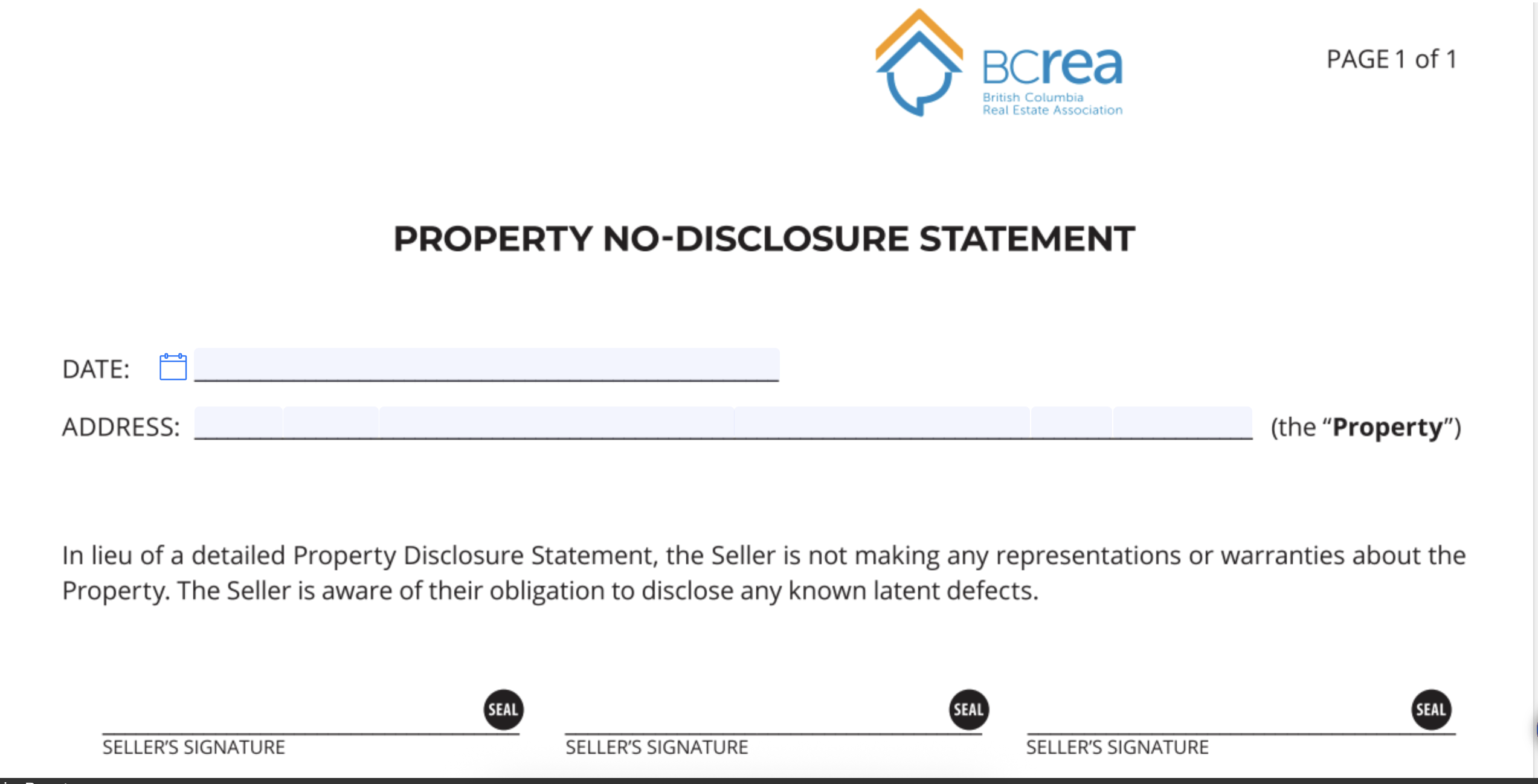
The PNDS is a short, concise form used to clearly inform the buyer that the seller is electing not to provide any representations or warranties about the property's condition.
The form includes two key statements:
"In lieu of a detailed Property Disclosure Statement, the Seller is not making any representations or warranties about the Property."
"The Seller is aware of their obligation to disclose any known latent defects."
Important Considerations for Sellers Using the PNDS
Choosing the PNDS does not free a seller from all disclosure obligations. It is critical for sellers to understand the following:
Material Latent Defects MUST Still Be Disclosed: The PNDS explicitly states that the common law obligation to disclose material latent defects (a defect that is not discoverable by reasonable inspection and renders the property dangerous or uninhabitable) still stands. If you know about a hidden, dangerous defect, you are legally obligated to disclose it, whether or not you fill out the PDS.
Buyer Perception: Buyers and their agents often view the delivery of a PNDS with suspicion. They will likely assume the seller is hiding something and will be alerted to conduct much deeper due diligence, including more invasive inspections.
Marketability: Using the PNDS can make the property more difficult to sell and may lead to a lower sale price or fewer offers, as it introduces a higher level of risk for the buyer.
Liability Risk: While it prevents liability based on inaccurate representations on a PDS, using the PNDS does not protect a seller from lawsuits if a known material latent defect is discovered after closing.
- Your real estate professional is required to discuss both the PDS and the PNDS with you so you can make an informed choice based on your knowledge of the property and your risk tolerance.
Property Non-Disclosure Statement
Examples of What to Disclose
The PDS asks a series of specific questions, and it's crucial to answer each one truthfully to the best of your knowledge. Here are a few examples of the types of information you would be expected to disclose:
Structural and Water Issues:
Any leaks or water penetration in the roof, basement, or foundation.
Previous flooding or water damage.
Known defects in the foundation, walls, or ceiling.
Current or past mold growth.
System Conditions:
Known issues with the plumbing, electrical, or heating/cooling systems.
Age and condition of the hot water tank or furnace.
Pest Infestations:
Any history of rodents, insects, or other pests.
Previous treatments for infestations.
Boundaries and Encroachments:
Known boundary disputes with neighbours.
Any encroachments on your property or by your property onto a neighbour's.
Contamination or Hazards:
Presence of asbestos, lead paint, or UFFI (urea-formaldehyde foam insulation).
Underground storage tanks.
Grow-op or drug lab activity.
Permits and Renovations:
Whether renovations or additions were done with proper permits.
Any known issues related to unpermitted work.
Legal Issues:
Any easements, rights-of-way, or restrictive covenants affecting the property.
Known latent defects (a defect that is not discoverable through reasonable inspection).
Remember, if you're unsure about an answer, it's always best to consult with your real estate agent or a legal professional. It is far better to over-disclose than to under-disclose.
The Seller's Responsibility
Filling out the PDS is not a task to be taken lightly. It requires careful thought and honesty. While your real estate agent can guide you through the process, the ultimate responsibility for the accuracy of the information rests with you, the seller.
If you discover new information about your property after completing the PDS but before the sale closes, you have a responsibility to update the statement and inform the buyer.
In conclusion, the BC Property Disclosure Statement is a cornerstone of transparent real estate transactions. For sellers, it's your opportunity to be forthright about your property's condition and, in doing so, significantly reduce your exposure to future liability. By embracing the PDS, you contribute to a smoother, more trustworthy selling experience for everyone involved.